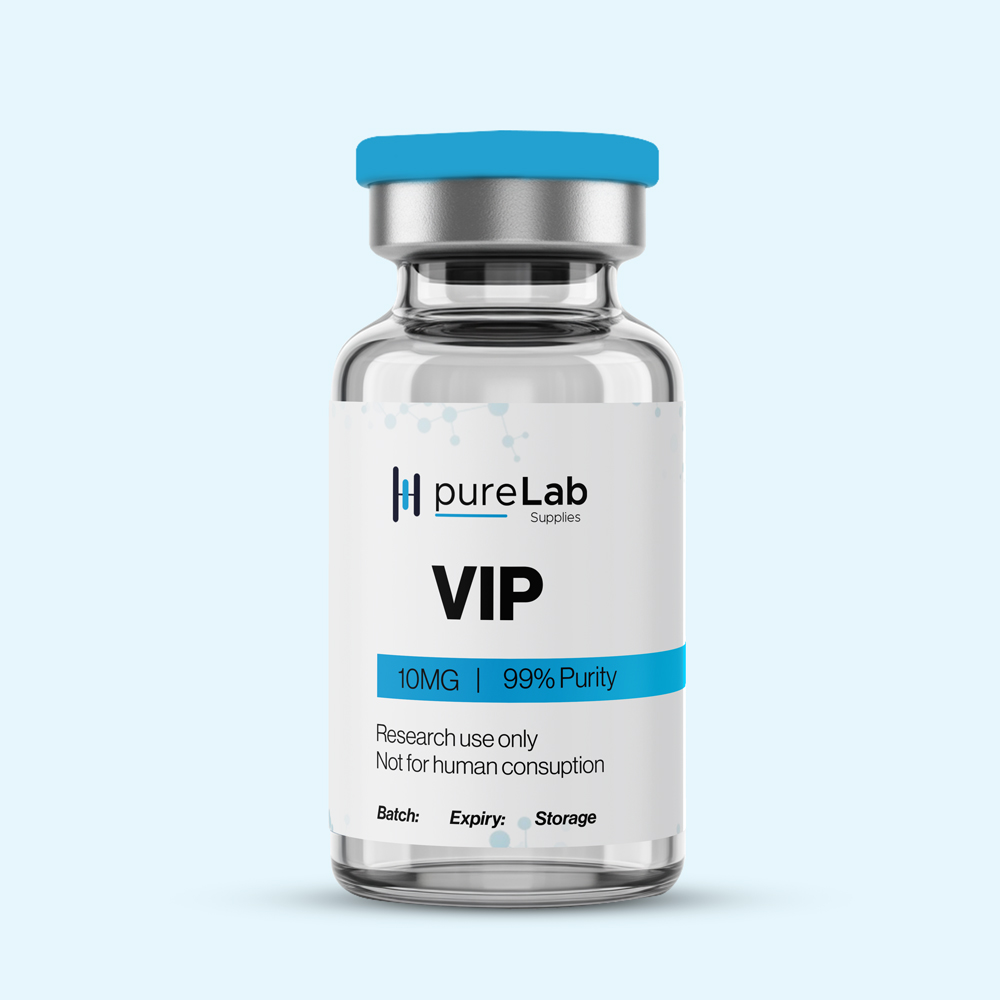
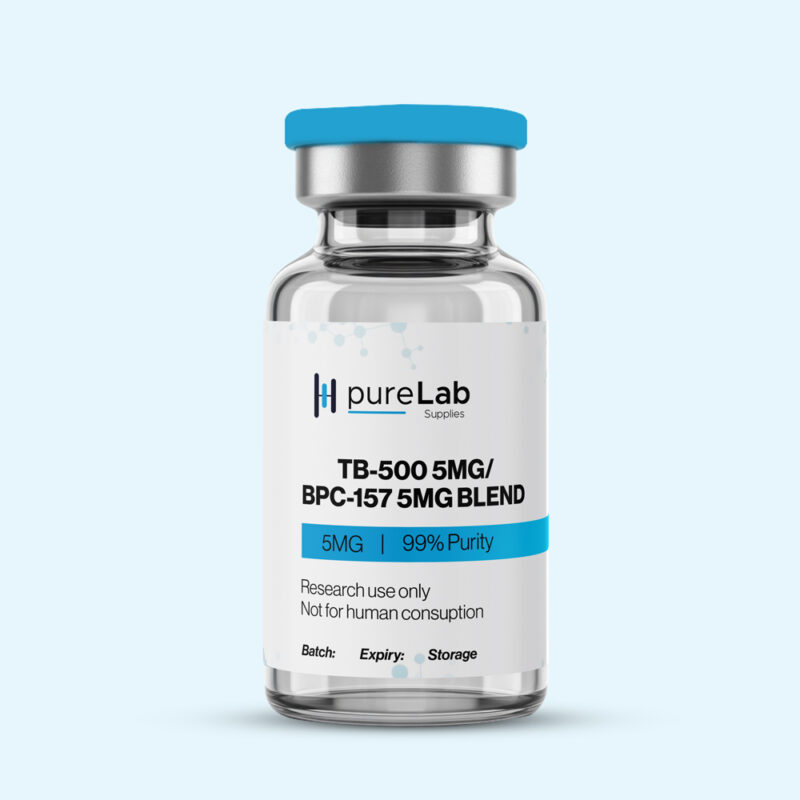
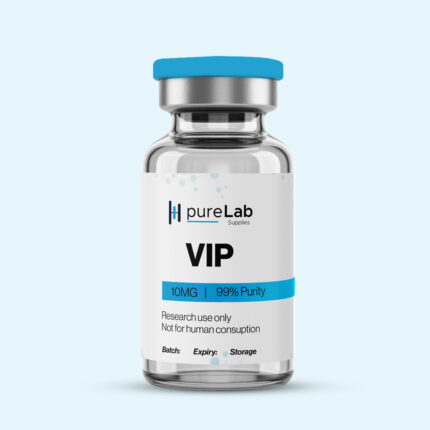
- Batch HPLC tested at 98.5%+ purity
- Store frozen long term or in fridge when ready to be used
- Sold for research purposes only
- Contact us for Wholesale Orders
VIP (Vasoactive Intestinal Peptide)
Synonyms / Designations: VIP, Vasoactive Intestinal Peptide, Intestinal Vasodilator Peptide
CAS Number: 40077-57-4
Molar Weight: 3325.83 g/mol
Peptide Classification: Synthetic neuropeptide; vasoactive intestinal peptide analogue
Purity: ≥ 99 % (HPLC, typical)
Appearance: White to off-white lyophilised powder
Storage: Desiccated, protected from light, stored at –20 °C
Solubility: Soluble in sterile water and buffered aqueous solutions
Description & Research Context
Vasoactive Intestinal Peptide (VIP) is a 28–amino acid neuropeptide originally identified in intestinal tissue and later found to be widely distributed in the central and peripheral nervous systems. In research settings, VIP is used as a well-characterised ligand for studying VPAC1 and VPAC2 receptor-mediated signalling pathways.
In biochemical and cellular research models, VIP is investigated for its role in cyclic AMP signalling, smooth muscle relaxation, neuroimmune interactions, and peptide–receptor binding dynamics. Observed molecular responses are dependent on experimental design, concentration, and model system and are used to explore signalling mechanisms rather than defined physiological outcomes.
Applications in Research
- As a molecular probe for studying VPAC receptor binding and activation
- Investigation of neuroendocrine and neuroimmune signalling pathways
- In vitro studies examining peptide-mediated smooth muscle and neuronal signalling
- Use as a reference neuropeptide in receptor pharmacology research
Handling, Reconstitution & Stability
- Reconstitute in sterile water or appropriate buffered aqueous solution depending on assay requirements
- Avoid vigorous agitation during dissolution
- Aliquot reconstituted solutions to minimise repeated freeze–thaw cycles
- Store reconstituted peptide at –20 °C or lower for long-term stability
- Protect from prolonged exposure to light and elevated temperatures
Precautions & Notes
- Experimental behaviour of VIP is influenced by receptor expression, concentration, and exposure duration
- Neuropeptide signalling responses may vary across experimental models
- Buffer composition and pH may affect peptide stability and assay performance
- Intended strictly for laboratory research use; not for human or veterinary application
References
Said SI, Mutt V. “Polypeptide with broad biological activity: isolation from small intestine.” Science, 1970.
Harmar AJ et al. “International Union of Pharmacology. XVIII. Classification of receptors for vasoactive intestinal peptide and pituitary adenylate cyclase-activating polypeptide.” Pharmacol Rev, 1998.
Delgado M et al. “Vasoactive intestinal peptide and pituitary adenylate cyclase-activating polypeptide in immune regulation.” Int J Biochem Cell Biol, 2004.
Keywords: VIP, Vasoactive Intestinal Peptide, VPAC Receptor Ligand, Synthetic Neuropeptide
 Free UK delivery over £500 · Order before 2pm for same-day dispatch
 Every batch third-party tested · 99%+ purity
 For research use only · Not for human consumption