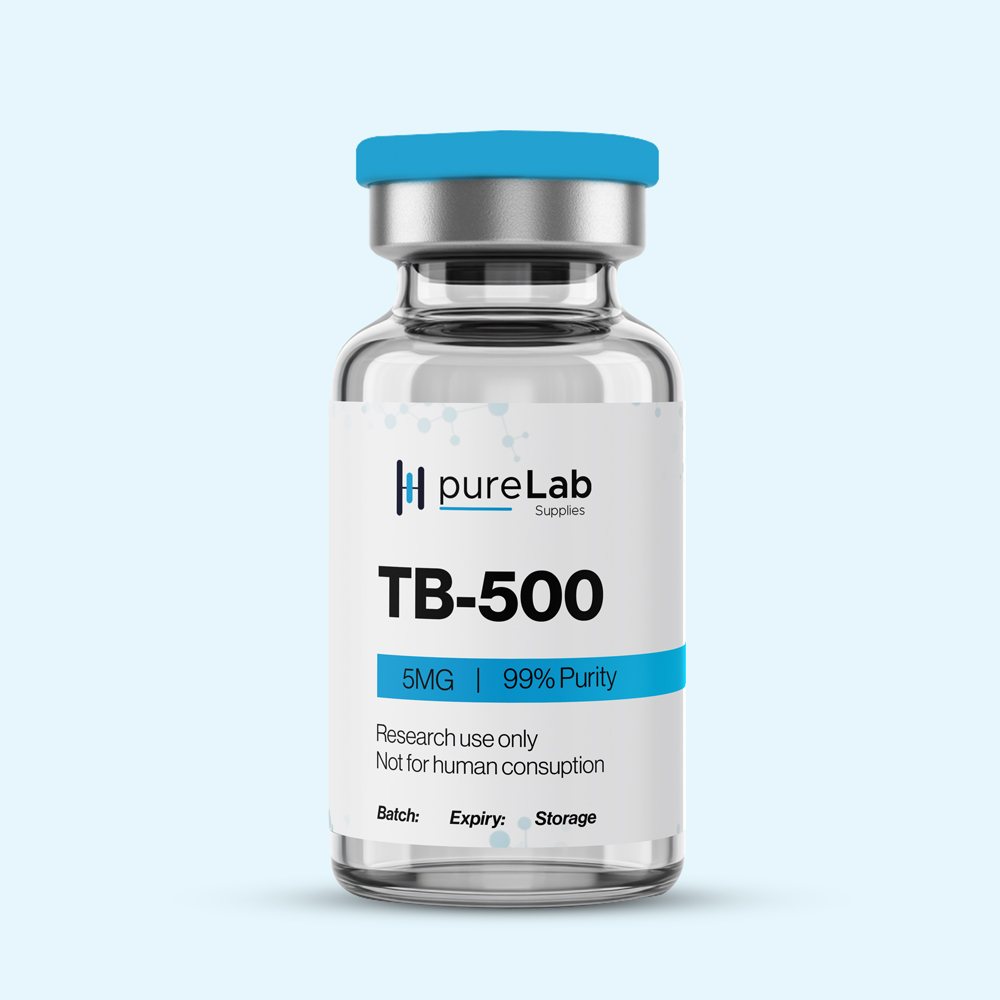
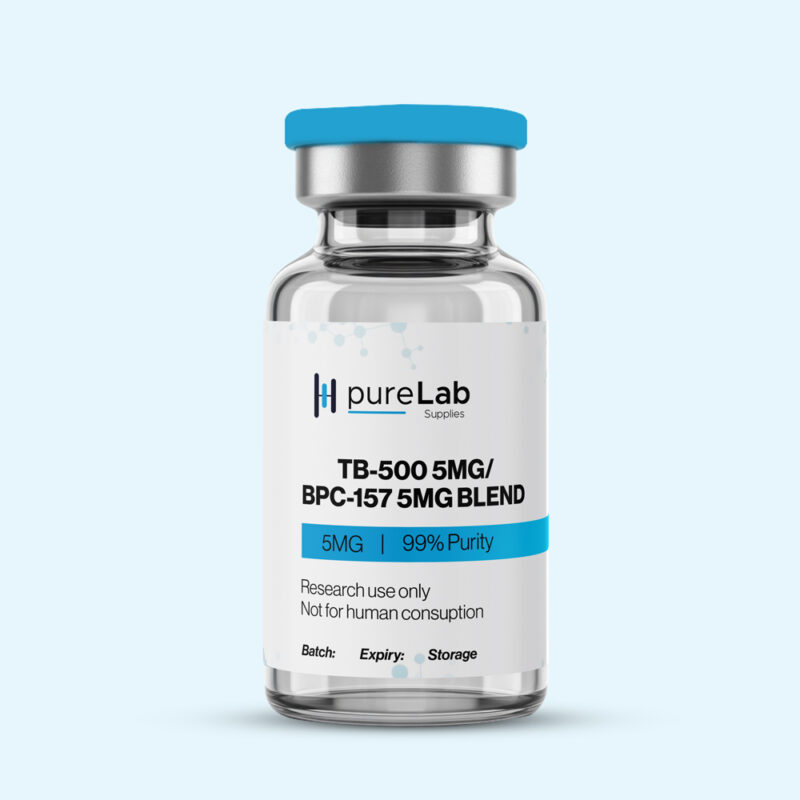
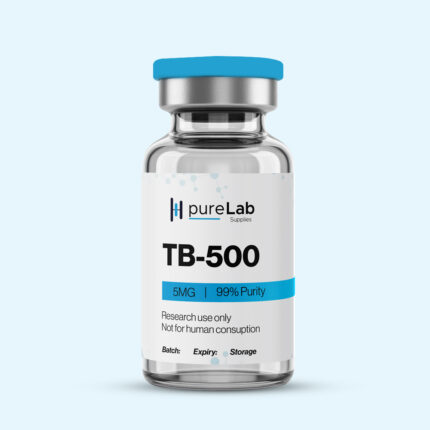
- Batch HPLC tested at 98.5%+ purity
- Store frozen long term or in fridge when ready to be used
- Sold for research purposes only
- Contact us for Wholesale Orders
TB-500
Synonyms / Designations: TB-500, Thymosin Beta-4 Fragment, Synthetic Thymosin β4-Derived Peptide
CAS Number: 77591-33-4
Molecular Formula: C212H350N56O78S
Molecular Weight: ~4963.0 g/mol
Peptide Length: 43 amino acids
Peptide Type: Synthetic peptide derived from thymosin beta-4
Purity: 99% (HPLC, typical)
Appearance: White to off-white lyophilised powder
Storage: Desiccated, protected from light, stored at –20 °C or below
Solubility: Soluble in water and buffered aqueous solutions
Description & Mechanism
TB-500 is a synthetic peptide derived from the active region of thymosin beta-4, developed for experimental investigation of actin-binding dynamics, cell migration, and cytoskeletal organisation in controlled research settings.
In biochemical and cellular research models, thymosin beta-4-related peptides are studied for their interaction with G-actin, influencing actin polymerisation and cytoskeletal remodelling. Observed responses depend on peptide concentration, exposure duration, cell type, and experimental conditions.
Applications in Research
- Investigation of actin dynamics and cytoskeletal regulation
- In vitro studies of cell migration and cellular organisation
- Experimental models examining tissue structure and repair signalling
- Reference peptide in thymosin beta-4-related research
Handling, Reconstitution & Stability
- Weigh under dry conditions; peptide may be hygroscopic
- Reconstitute in sterile water or appropriate buffered aqueous solution
- Avoid vigorous agitation during dissolution
- Filter sterilize if required
- Aliquot and store reconstituted solutions at –20 °C or lower
- Avoid repeated freeze–thaw cycles
Precautions & Notes
- Experimental outcomes depend on cell type and assay conditions
- Buffer composition, pH, and ionic strength may influence peptide stability
- Appropriate controls are recommended
- Intended strictly for laboratory research use only
References
Gupta S., Paliczak A., Delgado D. Evidence-based indications of thymosin beta-4 for wound healing and tissue regeneration. Annals of the New York Academy of Sciences, 2021.
https://pmc.ncbi.nlm.nih.gov/articles/PMC8228050/
Sosne G., Qiu P., Goldstein A.L., Wheater M. Biological activities of thymosin beta-4 defined by active sites in short peptide sequences. FASEB Journal, 2010.
https://iovs.arvojournals.org/article.aspx?articleid=2423767
Malinda K.M., Sidhu G.S., Mani H. et al. Thymosin beta-4 accelerates wound healing. Journal of Investigative Dermatology, 1999.
https://pubmed.ncbi.nlm.nih.gov/10469335/
Keywords: TB-500, Thymosin Beta-4, Synthetic Peptide, Actin Regulation, Cytoskeletal Dynamics, Research Peptide
 Free UK delivery over £500 · Order before 2pm for same-day dispatch
 Every batch third-party tested · 99%+ purity
 For research use only · Not for human consumption